NO PARENT would send their five-year-old into a swimming pool without proper safety gear and supervision.
Putting your loved ones in an unsafe vehicle is not much different from sending a young child into a pool without taking the necessary safety precautions.
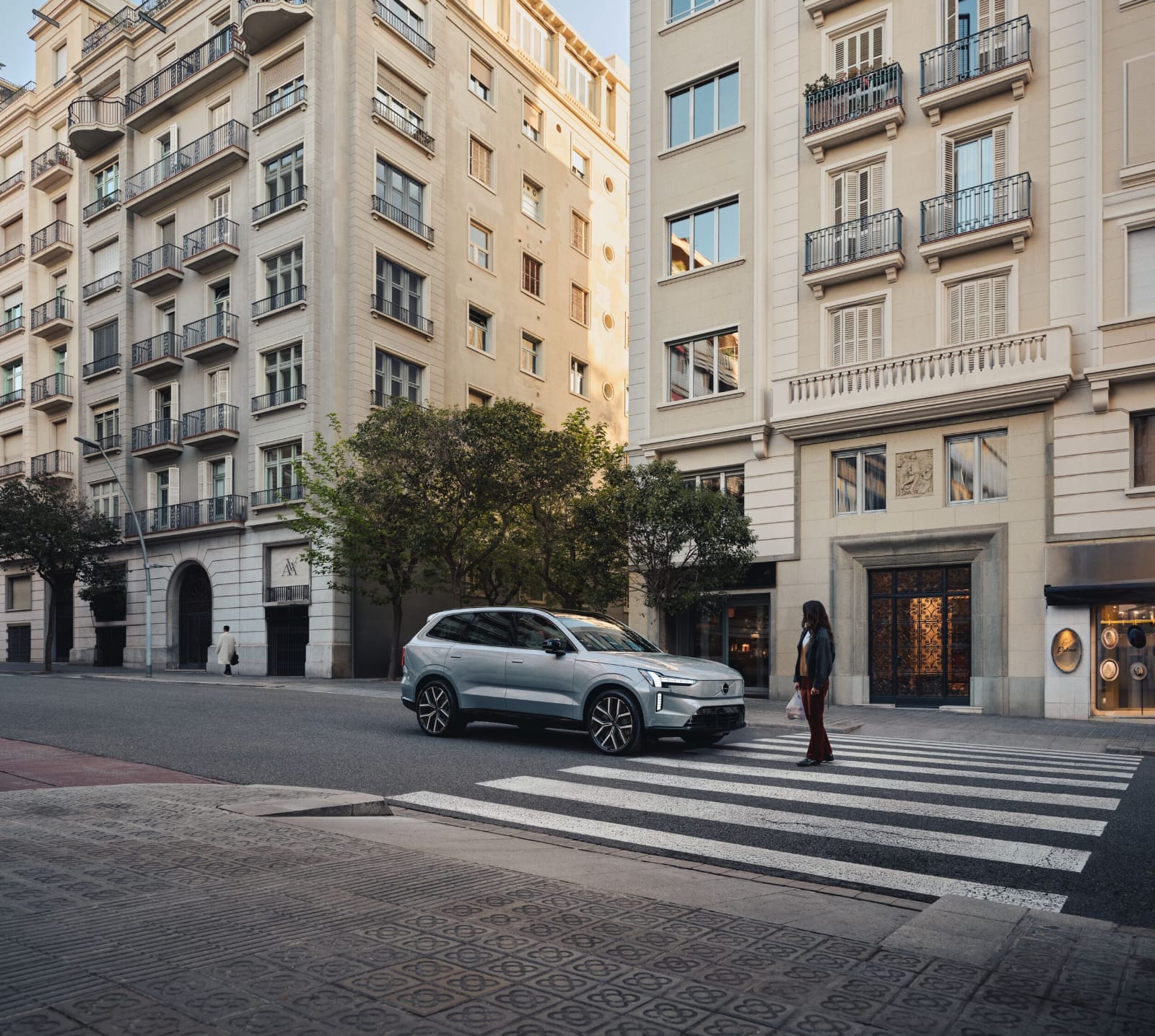
That is why Volvo continues to place safety at the heart of its vehicles and its approach to motoring.
Gresham Pillay, Commercial Director for Volvo Car South Africa, says achieving a five-star Euro NCAP crash rating is important because it demonstrates how a vehicle performs in specific, scripted collisions under controlled conditions and a fixed set of variables.
“It is the highest safety rating a car can get and says a lot about how seriously manufacturers take safety,” says Pillay.
However, he points out that there is a significant difference between how a vehicle behaves in a controlled test environment and how it performs on a rain-slicked highway at dusk or on an unpredictable stretch of road during a storm in KwaZulu-Natal.
“For South African motorists, the space between those two scenarios is where safety is genuinely decided, and it is a space that a rating alone cannot describe,” he says.
South Africa has one of the largest road networks in the world, connecting long-distance highways, dense urban corridors and everything in between.
“It winds through misty forests, mountainous terrain, baking semi-arid plains and coastal vistas. For most families, a car is not an occasional-use asset; it is how children get to school, parents reach work and relatives come together across considerable distances,” says Pillay.
Such varied driving conditions demand more than compliance with a set of global standards. They require an understanding of how people use their vehicles in the real world, across different environments, road conditions and everyday scenarios.
Since 1970, Volvo’s Traffic Accident Research Team has analysed more than 50,000 real-world accidents involving over 80,000 occupants. This research has helped inform the development of safety technologies, including whiplash protection and side-impact airbag systems that remain standard in vehicles today.
“That research did not begin with a test protocol. It began with collisions, injuries and the patterns that emerged from studying them closely over decades,” says Pillay.
The resulting approach treats regulatory testing as a threshold to clear, rather than a ceiling to design towards.
That same real-world approach now extends to how vehicles monitor and respond to their drivers, rather than focusing only on what happens on the road.
Volvo’s driver-monitoring technology is designed to detect signs of distraction, drowsiness and impairment, allowing the vehicle to intervene before a lapse in attention becomes a collision.
“This reflects a broader shift already underway across the industry: safety engineering is no longer only about how a car absorbs impact, but increasingly about how it helps prevent that impact from occurring in the first place,” he says.
Of course, none of this removes risk from South African roads entirely. No vehicle can.
But it does change what a buyer can reasonably expect from the vehicle they choose.
Ultimately, the value of a safety-led vehicle is not best measured against a specification sheet. It is measured in the confidence of a parent doing the school run on a wet morning, or a family setting out on a long-distance journey, trusting that the vehicle beneath them was built with exactly that journey in mind.
“That confidence, quietly present on every ordinary drive, is what safety-led engineering is ultimately for,” concludes Pillay.
Also Read: