MANY South Africans considering an electric vehicle (EV) worry about charging times.
For some, the idea of plugging in still feels like a disruption rather than the equivalent of a quick stop at a filling station.
But that perception is beginning to change.
In August, Zero Carbon Charge announced plans to double the charging capacity at its two N3 charging hubs, increasing each from 360 kW to as much as 720 kW.
The hubs had been operational for just three months, but the upgrade was brought forward because usage exceeded the company’s expectations.
For several years, the conversation around electric vehicles in South Africa has centred on one key concern: would the charging infrastructure keep pace with adoption?
That infrastructure is arriving, and in some locations, demand is already outpacing expectations. This raises a more practical question: what do you do with the half-hour while your vehicle charges?
A typical stop at a public fast charger can take around 30 minutes, depending on the vehicle, charger and battery’s state of charge. That is enough time to do some grocery shopping, catch up over coffee, collect a child from school or respond to emails that would otherwise wait until later.
At the N3 hubs, drivers can visit a farm stall, use the restroom or connect to free Wi-Fi, making the stop feel more like a break in the journey than an interruption.
“When you think about it, half an hour is not a long time. On a long journey, it passes while you’re still in the queue buying chips and waiting for everyone to come back from their bathroom break,” says Grant Locke, Managing Director of Volvo Car South Africa.
“On shorter ones, you can still take up that time running to the ATM and making a quick call. The point being that charging your vehicle is no longer an inconvenience; it’s a quick pit stop while you go on with your day.”
The time required to charge an EV varies according to the vehicle’s battery technology, charging capability, the charger’s output and the battery’s state of charge.

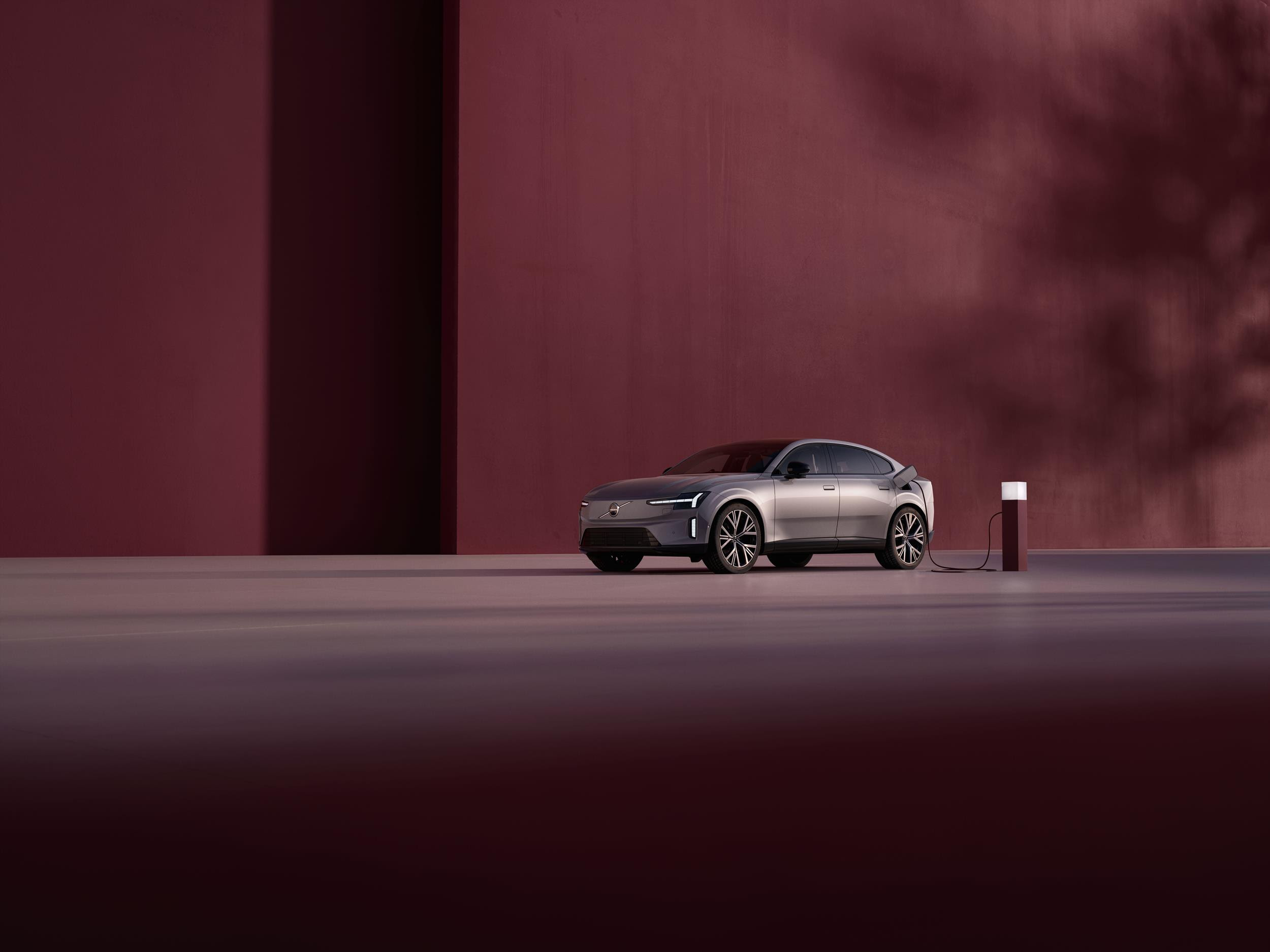
Volvo’s ES90, for example, uses an 800-volt electrical architecture and is quoted as charging from 10% to 80% in approximately 22 minutes when connected to a suitable 350 kW charger.
The Volvo EX30 takes around 26 minutes under the stated conditions when using a 175 kW charging unit. At 75 kW chargers, which are common at many shopping centres, charging can take 30 minutes or longer, depending on the vehicle.
As public charging infrastructure expands, more stations are appearing in places where motorists already spend time, including shopping centres, office parks and restaurants.
In major centres such as Johannesburg, Cape Town and Durban, public charging options are becoming increasingly accessible, although coverage varies by area and route.
Public charging is only part of the picture. For many EV owners, most charging takes place at home, often overnight when the vehicle is parked and, depending on the electricity tariff, at a lower cost.
Public chargers serve a different purpose: topping up the battery while motorists are already out, or providing energy during longer journeys. This makes the location and convenience of charging stations just as important as their maximum charging speeds.
The growing network does not make EV ownership entirely effortless. Charger availability still varies, and long-distance trips require more planning than simply filling a petrol tank.
Charging times also depend on factors such as battery temperature, charging limits and how much energy is needed.
However, as infrastructure improves and charging stations become part of everyday destinations, the experience is becoming easier to accommodate.
With fuel prices continuing to put pressure on motorists, electric vehicles are also attracting attention as an alternative to conventional petrol and diesel cars.
The idea that every charging session represents 30 minutes lost assumes that the time would otherwise be unoccupied. For many drivers, those minutes can be used for errands, a coffee break, a meal or a quick catch-up.
South Africa’s EV charging infrastructure is developing, and in some locations, demand is already challenging expectations. The next step may be less about convincing motorists that charging takes time and more about showing them how easily that time can fit into everyday life.
Also Read:
SELL YOUR CAR WITH CONFIDENCE: INTRODUCING CAR TRENDS PARK & SELL